Pokeberries: A grape look-alike

The bottom line
Pokeberries are found in grape-like clusters on tall perennials with purple-red stems. Eating several berries can cause stomach pain, nausea, vomiting, and diarrhea. Adults have eaten the roots, mistaking them for medicinal plants. Serious symptoms have subsequently occurred, including bloody vomiting, bloody diarrhea, and low blood pressure.
Prevention Tips
Children should be taught never to eat wild berries unless they first check with a knowledgeable adult.
The best way to keep very young children safe is to watch them closely outdoors.
If you find pokeweed in your yard, consider keeping it cut down or, better yet, digging up and discarding the plant.
This Really Happened
Case 1. An 18-month-old boy wandered away from his mother in his own front yard for less than a minute. She found him with purple juice all over his hands and mouth, near a plant with clusters of dark purple, almost black, berries. She immediately researched the berries on the internet and believed from the photos that they were pokeberries. She called her poison center. Due to the brief time the child was away from his mother, the poison center did not think he could have eaten enough berries to cause serious stomach pain, vomiting, or diarrhea. His mother was told to give him something to drink and eat, wash his skin, and watch him at home. The poison center checked back with her about 5 hours later, and he was fine. He later had a normal bowel movement—with some berries in it.
Case 2. A 44-year-old man mistook pokeweed root for Ginseng root and ate it. Two hours later, he had abdominal pain, nausea, vomiting, severe diarrhea, hypotension, and urinary incontinence. Intravenous fluids and antiemetics were administered. He was admitted to the hospital and continued to have severe diarrhea and low-grade fever. Symptoms improved after 3 days and he was discharged home.
What are pokeberries?
Pokeweed (Phytolacca americana) is an herbaceous perennial found primarily in the eastern US. Individual plants can be a few feet tall or the height of an adult human. In the spring, some people cook young poke leaves to create a "poke salad." The leaves must be boiled and drained twice to be eaten safely. During the summer, clusters of white flowers turn into green berries. By August, many or most of these berries will have become shiny and purple. The plants grow from deep tap roots that are hard to dig up.
Are pokeberries poisonous?
The entire pokeweed plant is poisonous. Children who eat a berry or 2 are not likely to develop symptoms. Eating several berries, though, can cause a lot of stomach pain, nausea, vomiting, and diarrhea.
Are pokeweed roots safe to eat?
Adults have eaten the roots, mistaking them for medicinal plants. Serious problems have occurred, including bloody vomiting, bloody diarrhea, and low blood pressure.
Pokeberries vs. grapes: how to tell them apart
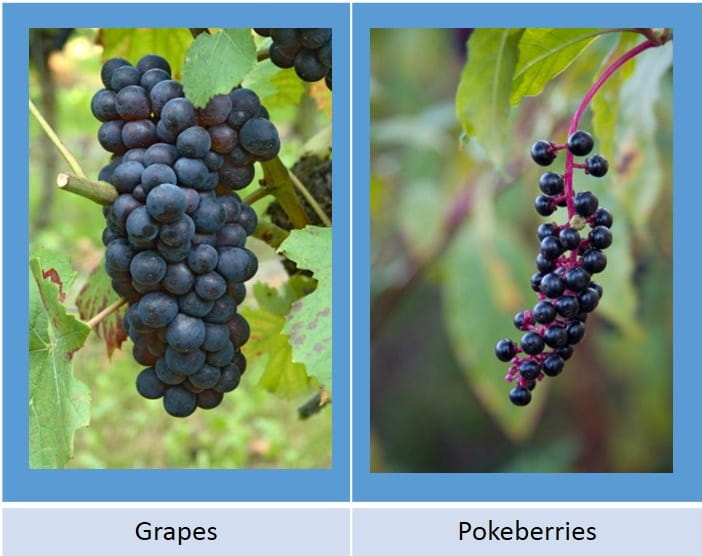
To a child, pokeberries look like grapes: clusters of purple berries hang from stems, usually at a child's eye level. Adults can easily tell pokeberries from grapes by their red stems, which don't look like woody grapevines at all.
Consider the graphic below. These purple berries look alike. But are they both safe to eat? Can you and your child tell them apart?
How to kill pokeweed
Pokeweed will die in the winter frost, but the plants are difficult to fully eliminate because of their deep root systems. The most effective herbicides for pokeweed are glyphosate (Roundup) and triclopyr. Care must be taken when using either of these herbicides since overspray will affect neighboring plants.
What to do if someone eats a pokeberry
If your child eats pokeberries, rinse out his or her mouth and give some water or milk to drink. Then, use the webPOISONCONTROL® online tool to get help, or call your poison center at 1-800-222-1222. You will be asked some questions about your child and what he or she ate. Then, you'll be told what to do. Often, watching a child at home will be enough. If emergency care is needed, our experts will direct you to the emergency room.


