Contact lens solutions: Daily care for your eyes
The bottom line
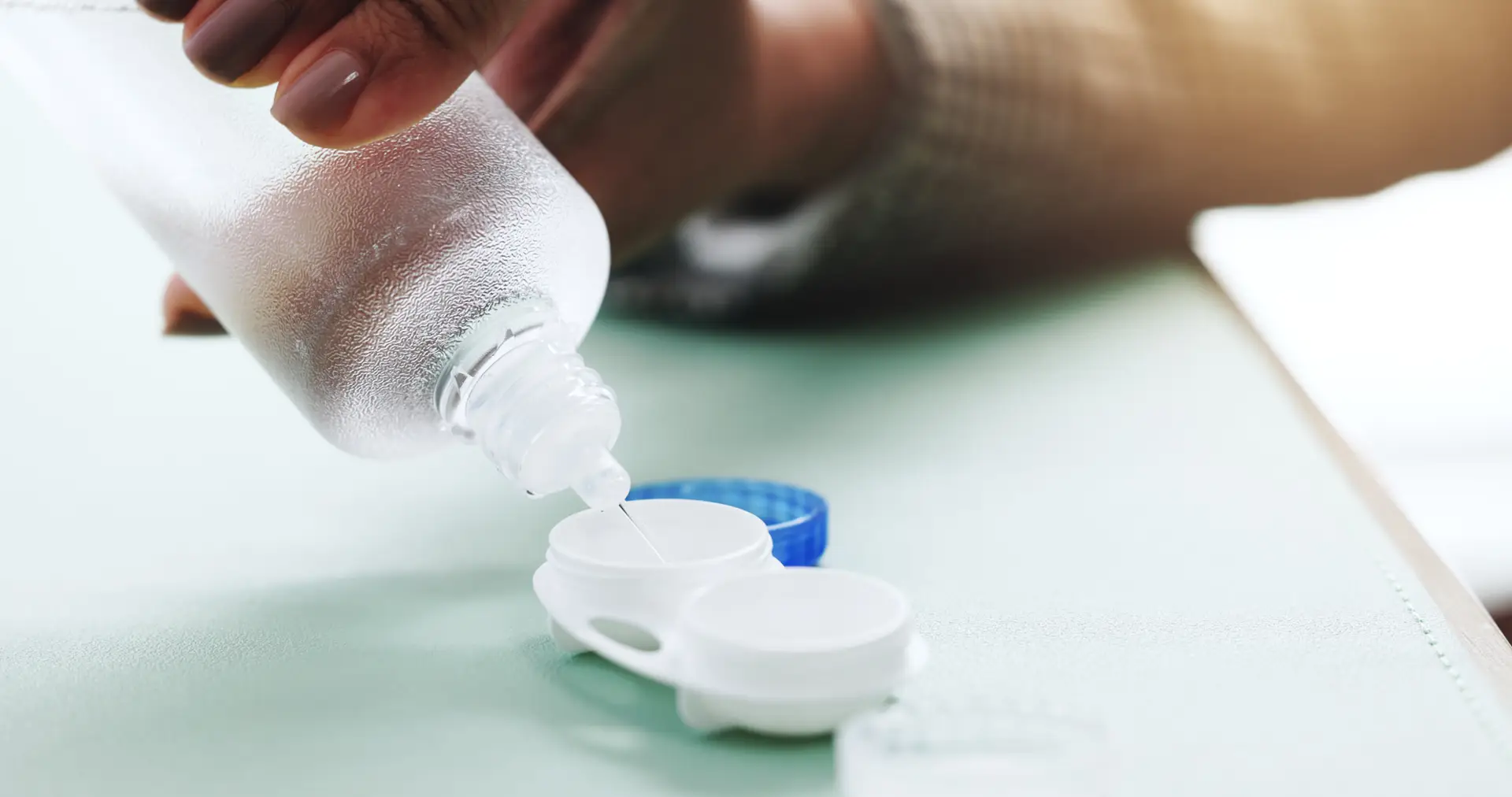
Contact lens solutions are sterile liquids to clean, disinfect, and store lenses. Types include multipurpose, saline, hydrogen peroxide, and rigid gas permeable solution. In the eyes, they can cause stinging, redness, tearing, and blurry vision. If swallowed, mild stomach upset can occur. Hydrogen peroxide solutions can cause chemical burns to the eyes or mouth.
Prevention tips
Store contact lens solution up, away, and out of reach of children.
Use fresh solution daily.
Discard used solution daily.
Use the right solution for your lens type.
Do not use tap water or saliva to clean lenses.
Keep your lens case clean and replace it every few months.
Do not use past the expiration date.
Do not combine different solution brands.
For hydrogen peroxide solution, soak for at least 6 hours.
This really happened
Case 1. A 79-year-old woman with low vision accidentally rinsed her contact lens with hydrogen peroxide cleaning solution rather than the rinsing solution. The 2 solutions came in bottles of a similar size and shape. She went to the doctor with a painful, red right eye. An eye exam showed significant redness, swelling of the cornea, and a large area where the outer layer of the cornea had rubbed off, surrounded by many tiny spots of surface irritation.
Case 2. A 46-year-old man used daily-wear soft contact lenses for 10 years. He followed all the recommendations for rinsing, disinfecting, and replacing contact lens solution. Two days before he was examined, he experienced a red, painful left eye. Vision in his right eye was 20/20 and in his left eye was 20/80. Slit lamp examination was abnormal with conjunctival hyperemia and edema, a central ulcer in the left cornea and keratic precipitates. The diagnosis was microbial keratitis. Specimens collected from the left eye and the contact lens case showed Bacillus cereus. He was treated with tobramycin (1.5%) drops, ciprofloxacin (0.3%) drops and atropine (1%) drops. The corneal ulcer healed over the next 6 days and 3 weeks after the initial exam, the best-corrected visual acuity in the left eye was 20/20.
Poisoned? Get expert help.
Don't guess what you should do. Get accurate answers online or by phone. Both ways are free and confidential.
OR
call 1-800-222-1222
What is in contact lens solution?
Contact lens solution contains sterile water, saline (sodium or potassium chloride), disinfectants to kill germs, surfactants to clean debris from the lens surface, wetting agents to keep the contact lens moist, buffers to prevent stinging, and preservatives.
What are the different types of contact lens solution?
There are several types of contact lens solutions. Multipurpose solution cleans, rinses, disinfects, and stores soft lenses. Examples of multipurpose solutions include Biotrue, Opti-Free, and ReNu. Saline solution is used to rinse lenses before insertion or to dissolve enzyme tablets.
Hydrogen peroxide-based solutions (such as Clear Care) are used for deep cleaning. Lenses are soaked in a specialized case with a neutralizing disc for at least 6 hours.
Rigid gas permeable solution is used for hard or gas-permeable lenses. It is available as a multi-action formulation or separate daily cleaners and soaking solution. Brand names for rigid gas permeable solutions include Boston, Menicon Unique pH, Avizor GP Multi, Ote Clean, and Lobob.
What happens if you put hydrogen peroxide contact solution directly in your eye?
If you get hydrogen peroxide contact solution directly in your eye, it can cause chemical burns. In severe cases, it can scratch or cause sores on the cornea (the clear front of the eye).
Symptoms depend on the solution and may include burning, stinging, redness, tearing, irritation, a feeling that something is in the eye, blurry vision, and sensitivity to light.
What happens if you swallow contact lens solution?
Swallowing contact lens solution can cause nausea and mild stomach upset. It may also result in a burning sensation in the mouth and throat. Swallowing hydrogen peroxide solution can cause vomiting, drooling, difficulty swallowing, and burns in the mouth and esophagus.
Can you use contact lens solution as eye drops?
No, you should not use contact lens solution as eye drops. The cleaning agents and preservatives can cause irritation. Contact lens solution can cause dryness by removing the eye’s natural protection. Hydrogen peroxide solutions can cause burns.
What to do if contact lens solution gets in the eye
If it is saline solution, no treatment is needed. For other solutions, remove the contacts and rinse the eye with water for 15 minutes. Avoid rubbing the eye. Seek medical attention if the solution is hydrogen peroxide or if symptoms last more than 30 minutes after rinsing.
Get expert help
If contact lens solution gets in the eye, or if you have a question about using contact lens solution safely, use the webPOISONCONTROL® online tool to get help, or call your poison center at 1-800-222-1222. Whether online or by phone, expert guidance is always free, confidential, and available 24 hours a day.
What to do if your child swallows contact lens solution
If your child swallows contact lens solution, give the child water to rinse out the mouth and dilute the solution in the stomach. If the child swallows a hydrogen peroxide solution or develops symptoms such as severe vomiting, difficulty swallowing, difficulty breathing, or drooling, seek medical attention. If the solution contains hydrogen peroxide, burns in the mouth, esophagus, and stomach are possible.
Get expert help
If someone swallows contact lens solution, or if you have a question about using contact lens solution safely, use the webPOISONCONTROL® online tool to get help, or call your poison center at 1-800-222-1222. Whether online or by phone, expert guidance is always free, confidential, and available 24 hours a day.