Our research
Current active projects
Clinical impact of online triage platforms
Characterizing webPOISONCONTROL data
Refining triage thresholds with case-based evidence
Automating hazard and outlier detection in poison exposure cases
Real-world adverse effects of retatrutide reported to a digital toxicology platform
North American Congress of Clinical Toxicology 2026, San Diego
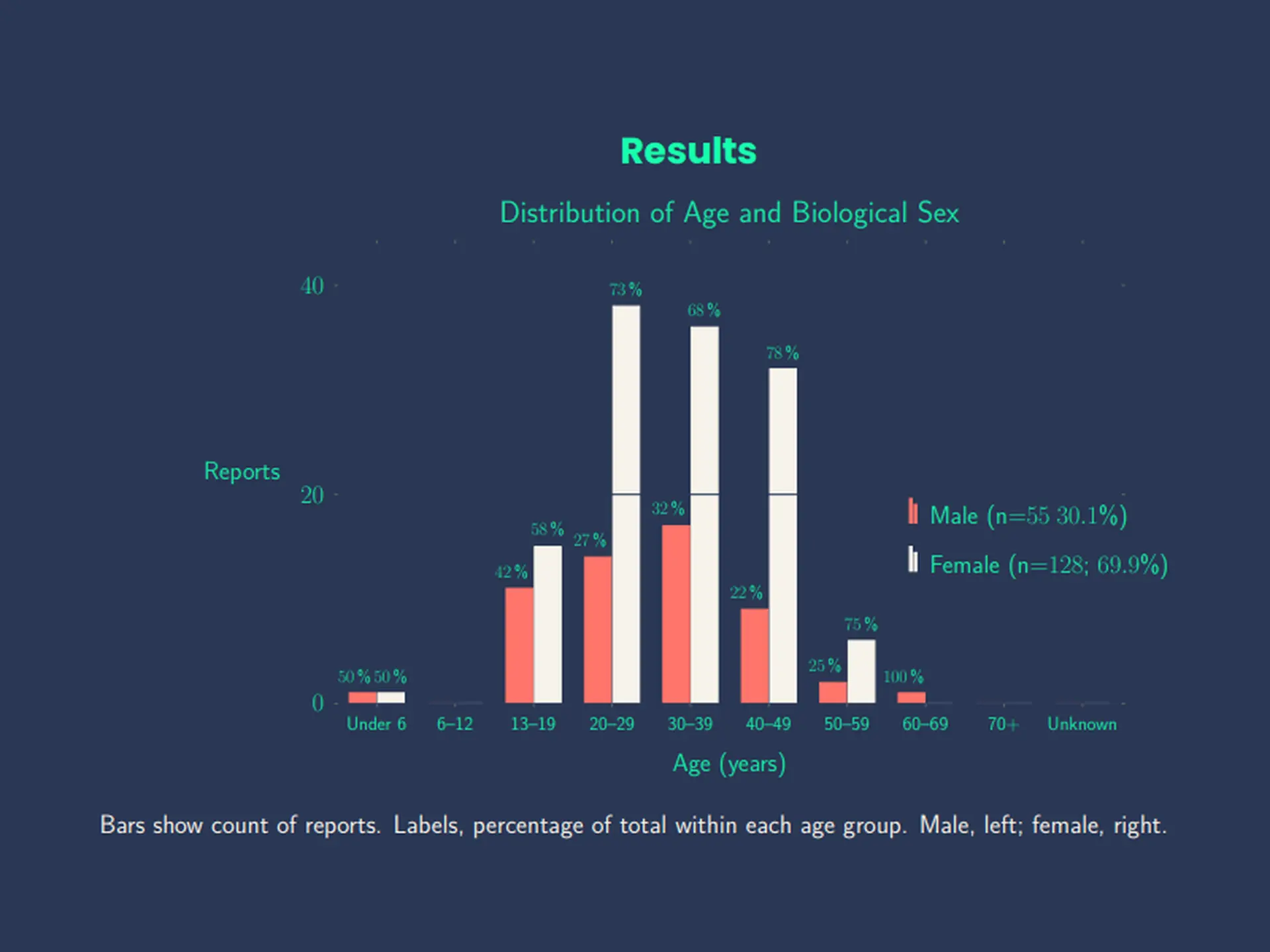
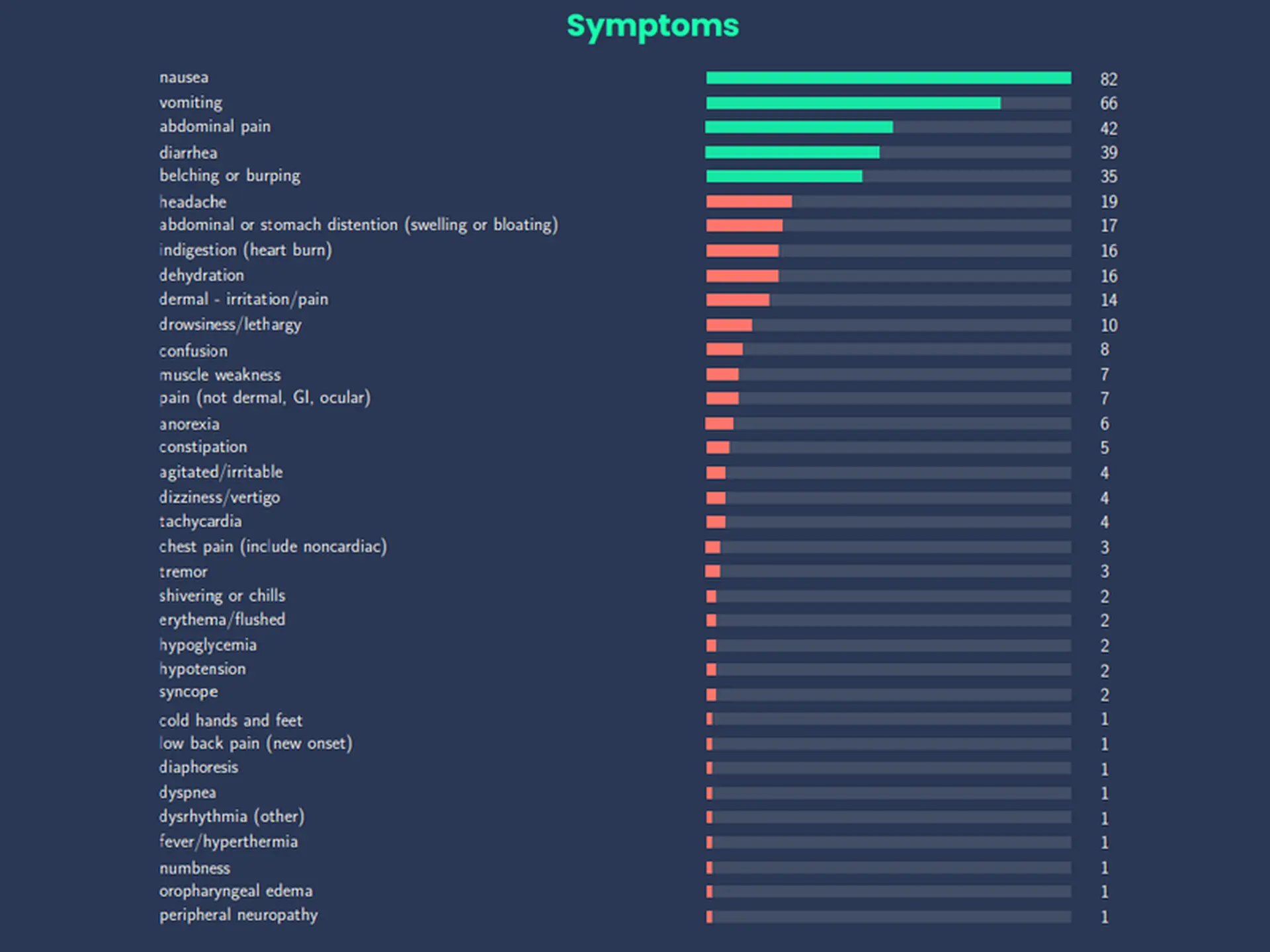
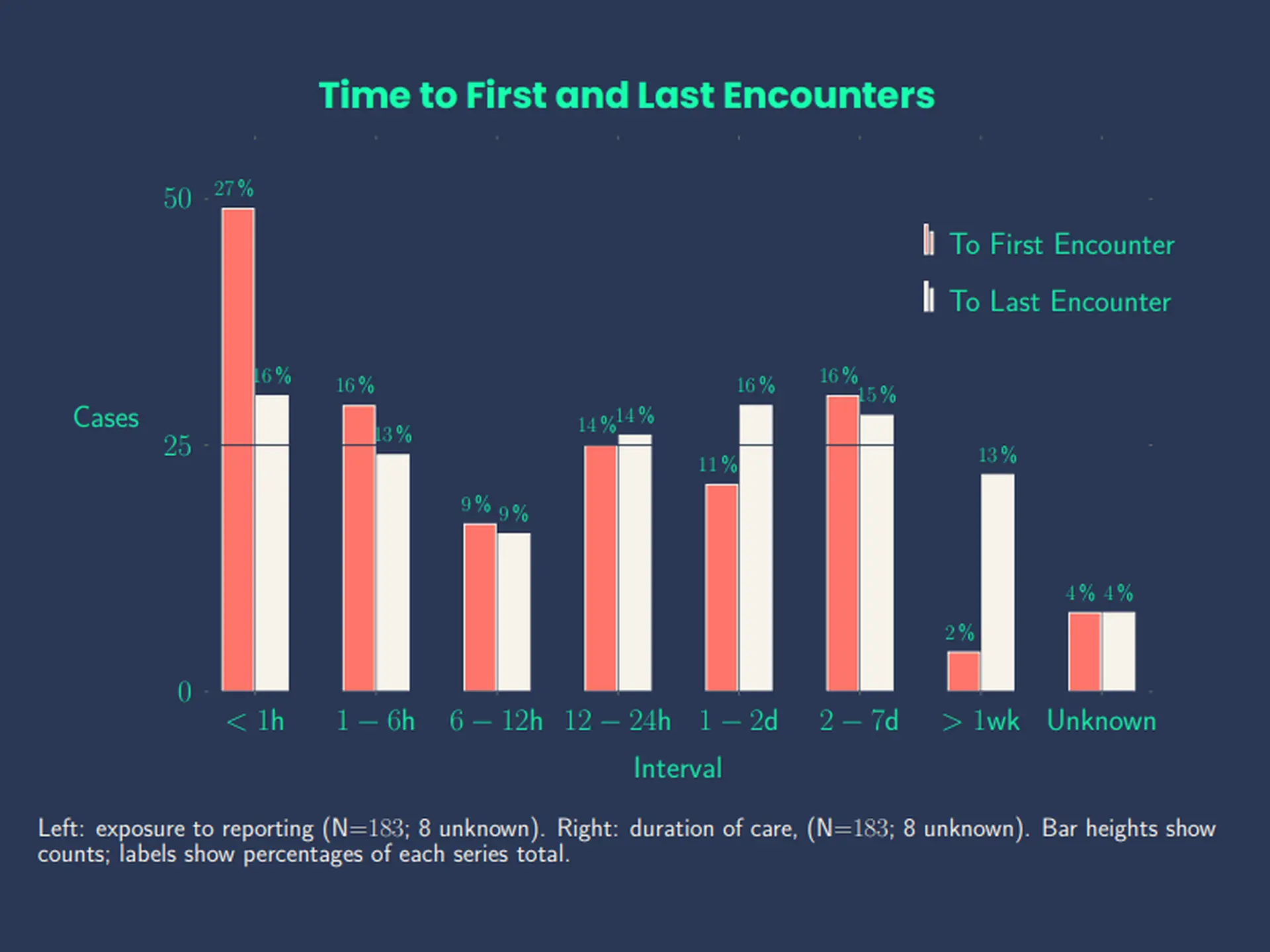
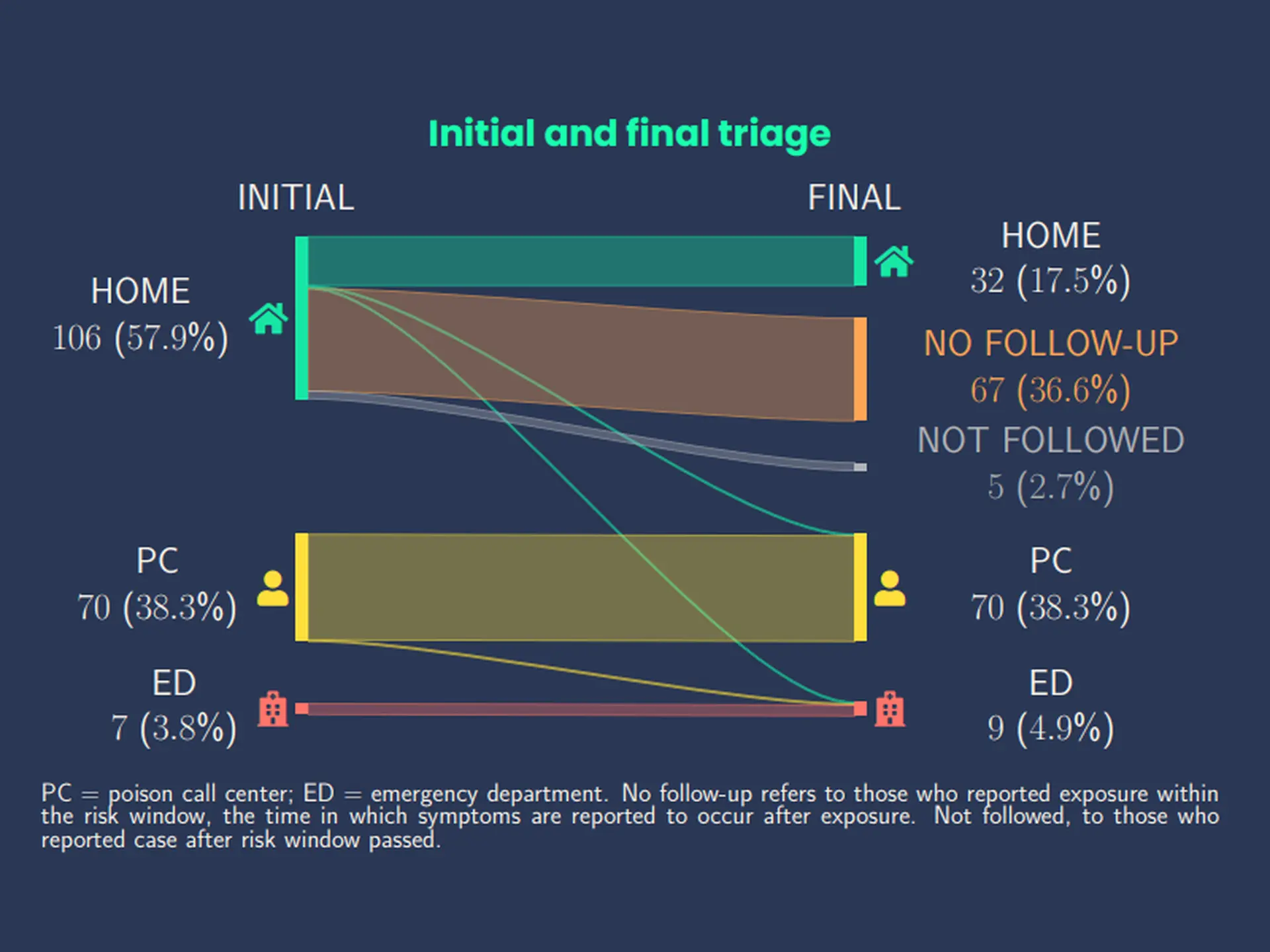
Retatrutide activates GIP, GLP-1, and glucagon receptors simultaneously and is being evaluated in Phase III trials for weight control. Data on adverse effects outside clinical trials are limited. This retrospective review describes reported symptoms and triage recommendations following 183 single-substance retatrutide injection exposures reported to webPOISONCONTROL® in 2025 and 2026. Gastrointestinal symptoms were most frequent: nausea, vomiting, abdominal pain, and diarrhea. 43% had symptoms that were sufficiently severe or persistent to warrant evaluation in the emergency department or a call to a poison center. Cases occurred disproportionately in adults ages 20 to 49 and in females (70% of cases).
How well do online triage systems agree with a poison call center? An assessment of low-risk exposures
American College of Medical Toxicology 2026 Annual Scientific Meeting
Study goal: Determine the variation in triage recommendations across PCC, PoisonHelp, and webPOISONCONTROL for uncomplicated exposures.


2020 webPOISONCONTROL data summary
American Journal of Emergency Medicine
Increasing use of the internet for health information has decreased utilization of traditional telephone-based poison centers in the United States. webPOISONCONTROL®, a browser-based tool and app was launched to meet the growing demand for online, personalized recommendations for human poison exposures. This study was conducted to characterize webPOISONCONTROL cases and highlight its potential for real-time monitoring of poisoning.


webPOISONCONTROL: can poison control be automated?
American Journal of Emergency Medicine
Background
A free webPOISONCONTROL app allows the public to determine the appropriate triage of poison ingestions without calling a poison center. If accepted and safe, this alternative expands access to reliable poison exposure guidance to those who prefer the Internet over the telephone. This study assesses feasibility, safety, and user-acceptance of automated online triage of asymptomatic, non-suicidal poison ingestion cases.
Results
Of 9256 cases, 73.3% were triaged to home, 2.1% to an emergency department, and 24.5% directed to call a poison center. Children younger than 6 years were involved in 75.2% of cases. Automated follow-up was done in 31.2% of home-triaged cases; 82.3% of these had no effect. No major or fatal outcomes were reported. More than 91% of survey respondents found the tool quick and easy to use. Median case completion time was 4.1 minutes.
Conclusion
webPOISONCONTROL augments traditional poison center services by providing automated, accurate online access to case-specific triage and first aid guidance for poison ingestions. It is safe, quick, and easy to use.


