
Vaccines Do Not Cause Autism
The Bottom Line
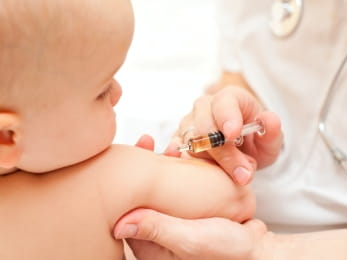
Autism is a life-long condition that begins in childhood, typically by age 2. Many people believe that there is a link between autism and childhood vaccination. There is no scientific controversy over whether vaccines cause autism: the answer is "no".
The Full Story
Vaccines do not cause autism. How was the erroneous link between vaccines and autism created?
Summary: Do vaccines cause autism? Does mercury in vaccines cause autism? There is broad scientific agreement that the answer is "no".
In 1998, the respected medical journal The Lancet published a paper by Andrew Wakefield and twelve other authors. They claimed that a new syndrome of gastrointestinal illness and autism was temporally associated with administration of the vaccine against measles, mumps, and rubella (MMR). [1]
It was later learned that Dr. Wakefield had fabricated and falsified data. In addition, he was found to have had significant financial conflicts of interest and to have violated standard ethical practices when conducting his study. [2] Ten of his co-authors repudiated their association with the findings of the paper. [3]). The Lancet published a retraction of the paper in February 2010. [4] Dr. Wakefield's license to practice medicine was revoked in May 2010 [5], as was that of one of his collaborators. [6] In January 2011, the British Medical Journal published an article and an editorial stating that Wakefield's paper was "an elaborate fraud". [7, 8]
Between the publication and retraction of the paper, no credible scientific evidence emerged linking vaccines or vaccine preservatives to autism. Other researchers were consistently unable to replicate Dr. Wakefield's findings. Yet, some parents were so alarmed that they would not allow their children to be vaccinated against any number of preventable childhood illnesses. Some parents never knew, or forgot, the virulence of such once-common diseases as measles, mumps, and polio. They did not understand, or perhaps did not believe, that paralysis, blindness, permanent hearing loss, brain damage, and death could be the consequences of these and other preventable illnesses. Many children became ill and some even died.
Even as Dr. Wakefield's reported findings were being evaluated and repudiated, another stream of concern entered the public consciousness. The vaccine given to children whom Wakefield studied did not contain mercury, but some vaccines in the United States were preserved with a mercury-containing compound called thimerosal. An emerging public health concern about effects of mercury exposure coincided with Dr. Wakefield's publication. Because certain forms of mercury are toxic to humans in sufficient quantity, some parents and clinicians feared that thimerosal might be a cause of autism. Although this association has been refuted by scientific evidence, many people continue to believe that the two are related.
Unfortunately, the causes of autism are not yet known. But it is known that autism is not caused by vaccines.
Facts about Autism: Autism is a life-long brain disorder that develops in young children, typically around the age of two. It is characterized by an inability to form social connections, diminished ability to communicate with others verbally and non-verbally, and such abnormal behaviors as constant repetition or focusing on only certain things to the exclusion of others. Children with autism are often described as normal infants who then lose their ability to speak, communicate, and interact and who develop a wide range of abnormal behaviors.
Manifestations of autistic behavior range so widely that, while "autism" is a term in wide use, it is more proper to use the terms "autism spectrum disorders" (ASD) or "pervasive developmental disorders" (PDD), of which autism is one. For example, about 50 percent of these children have significant intellectual challenges [9] with very low IQs, while children with Asperger's syndrome exhibit autistic behaviors but may develop normal or superior intelligence. Some children may behave passively while others demonstrate aggression. Some children may be unable to concentrate for more than very brief periods, while others may focus for unusually long periods of time on a specific activity. Moods can be unpredictable, ranging from depression to tantrums and mania. [9, 10]
Co-existing illnesses may include Tourette's syndrome, bipolar disorder, attention deficit hyperactivity disorder, and obsessive compulsive disorder, among others. Physical challenges may accompany behavioral and cognitive challenges. About 30 percent of autistic children have seizures. Chronic gastrointestinal symptoms, allergies, and infections frequently afflict these children. [11]
Diagnosis is made after observation and interactive testing. There are no lab tests or imaging studies that establish or confirm a diagnosis.
Autism is a biological disorder[1] with unknown causes. Some contributing factors have been identified, though:
- In 7-8 percent of cases, there is a genetic association; that number is expected to increase as research continues. For example, if autism is present in one identical twin, the other twin has a 70-90 percent likelihood of also having autism. [9]
- There is an association with increased parental age, both in the mother [12] and father [12, 13].
- Some environmental triggers have been identified, for example, pre-natal exposure to thalidomide, misoprostol, valproic acid, rubella infection, and chlorpyrifos. [9]
- It is thought that there are other possible environmental triggers, though as yet these have not been identified.
- There are likely to be many causes, including numerous combinations of genetic susceptibilities and environmental exposures.
In part because this disease is devastating to its victims and their families, research actively continues to pinpoint the causes. There are no known ways to prevent autism.
There is no cure, though there are some treatments. Early assessment and diagnosis allow for interventions that may improve some abnormal behaviors. Any accompanying disorders related to physical and mental health may then be assessed and treated as well.
Why were vaccines linked to autism? In 1998, Dr. Andrew Wakefield and twelve co-authors published a paper in the British medical journal The Lancet, in which they stated that a group of twelve previously normal children developed gastrointestinal disease and developmental regression soon after receiving a vaccination against measles, mumps, and rubella (MMR). [1] This had startling implications: in describing their new clinical findings, the authors had uncovered a promising area of research and possible prevention. Until then, no cause of autism had been found. On the other hand, it unleashed a torrent of guilt in parents who now felt responsible for the development of this terrible disease in their children.
The repercussions in the medical, research, and public health communities were felt quickly and widely.
- Researchers began trying to replicate Dr. Wakefield's findings, a standard scientific approach to determining if such reports were correct. One can gain an idea of the volume of research by reviewing the extensive bibliographies assembled by the Institute of Medicine in three studies [14, 15, 16], the Global Advisory Committee on Vaccine Safety [17], and in March 2010 by the U.S. Centers for Disease Control and Prevention. [18]
- Vaccination rates against childhood diseases fell. In England, the vaccination rate fell from greater than 92 percent to 80 percent. [19]
- Outbreaks of preventable diseases increased. To cite just two examples among many in the US alone:
- In a study comparing children who were vaccinated against pertussis (whooping cough) with those who were not, the unvaccinated children were twenty-three times more likely to develop pertussis. Some children were hospitalized, including children who developed pneumonia. [20]
- Before measles vaccine became available in the United States in the mid-1960s, there were a reported 450 deaths and 4,500 cases of encephalitis, a brain inflammation, each year from measles. By 2000 measles was eliminated in the United States due to near-universal vaccination of children. Thereafter, occasional cases occurred, typically because the victim contracted it overseas or was exposed to someone who entered the US with measles. From 2000 – 2007, approximately 63 cases per year were reported.
In the first seven months of 2008, 131 cases of measles were reported to CDC from the District of Columbia and 15 states. Eleven percent of victims required hospitalization, four of them children less than fifteen months old. Eighty percent of the victims were less than twenty years old, and 91 percent were not vaccinated (mostly for personal or religious beliefs, not medical ineligibility) or their vaccination status was not known. Many of these cases occurred in clusters, as the disease was passed from one unvaccinated child to another. [21]
After the publication of Dr. Wakefield's article, research continued assiduously to try to reproduce his results. Again and again, no association was found between vaccines and the development of autistic disorders. As early as 2004, scientific consensus was that vaccine administration was not associated with autism. [16] Research continued, though, in the hope that, if a link could be found, this dreadful condition could be prevented.
As scientific researchers continued to study any possible association between vaccines and autism, an entirely different line of inquiry was taking place. Brian Deer, an investigative reporter for The Sunday Times of London and Great Britain's Channel 4 Television began looking into allegations that Dr. Wakefield had significant financial conflicts of interest that called his findings into question. [22] Deer made allegations that, upon investigation by the U.K. General Medical Council (GMC), eventually resulted in Dr. Wakefield's losing his license to practice medicine. Among other findings, Deer alleged the following:
- In 1996, prior to beginning his study, Dr. Wakefield was hired and paid by a legal firm to provide evidence that the MMR vaccine then in use was flawed. In other words, he was required to find that the existing vaccine was dangerous.
- In 1996, Dr. Wakefield enrolled his first patient, whose parents had already filed a legal claim regarding their child's vaccination. (It later developed that almost all children in the study were involved in legal claims, thus not unbiased.)
- In 1997, Dr. Wakefield submitted a patent application for his own competing measles vaccine.
- In 1998, Dr. Wakefield published his paper. He did not acknowledge any conflict of interest. Nor did he acknowledge that the children, whom he claimed were entered into the study in an unbiased fashion, were in fact already pursuing legal claims related to their vaccinations and medical issues. He did not provide this relevant information when he had subsequent opportunities to do so.
- Dr. Wakefield was found to have subjected the children in his study to unneeded invasive medical procedures.
- He was found not to have met legal and ethical guidelines for entering children into the study and conducting his research upon them. In addition, he was found not to be qualified to order some of the interventions that he did order for these children.
- In addition, the clinical findings he reported did not match actual medical records of the children he enrolled in the study.
The list of Dr. Wakefield's alleged misdeeds is long; detail can be found in reports of the General Medical Council which examined and disciplined Dr. Wakefield. [2] The GMC heard testimony for 148 days and deliberated for an additional 45 days. In summary, Dr. Wakefield was found to have falsified data, violated ethical guidelines, subjected fragile children to invasive and unnecessary interventions, and published a document which he knew would precipitate a public health crisis for his personal financial gain.
The GMC stated that "…Dr Wakefield had a clear and compelling duty to ensure that the factual information contained in the paper was true and accurate and he failed in this duty". It further stated that Dr. Wakefield was found to have exhibited "a fundamental failure in the ethical standards expected of a medical practitioner" and was determined to be "guilty of serious professional misconduct". The General Medical Board disciplined Dr. Wakefield; he lost his license to practice medicine. [5] One of Dr. Wakefield's collaborators, Dr. John Walker-Smith, also had his license to practice medicine revoked, though this revocation was later retracted. [6]
In January 2011, the British Medical Journal (BMJ) published an editorial stating that Wakefield's paper was "a fraud". [8] An accompanying article detailed data manipulation in the paper. Based on reviews of case reports and parent interviews, Deer demonstrated numerous discrepancies between the actual medical records and the published reports, finding that "no case was free of misreporting or alteration". [7] Additional articles described secret commercial deals based on this discredited research [23] and the response by The Lancet, the journal which published Wakefield's paper in 1998, when allegations of impropriety were made. [24].
Why was thimerosal linked to autism? While unsuccessful attempts to reproduce Dr. Wakefield's claims were proceeding, another vaccine controversy erupted. This one involved thimerosal, a mercury-containing preservative used (successfully) to combat bacterial contamination of vaccines. Thimerosal was introduced into vaccines early in the 20th century; its safety was not seriously questioned for decades.
There are several forms of mercury, among them the following:
- Metallic mercury is the heavy, silver-colored liquid found in mercury thermometers and blood pressure monitors, as well as industrial equipment. It can be toxic to humans if it is heated or vaporized, then inhaled.
- Methylmercury was identified by environmental scientists as the cause of Minamata disease in Japan, mercury poisoning from eating fish contaminated by industrial discharge containing mercury. Victims numbered in the many thousands, perhaps hundreds of thousands. Effects included staggering gait, numbness and tingling, visual and hearing impairment and other neurological effects. Children born to pregnant women who ate the poisoned fish were born with deafness, severe neurological deficits, and seizures [25] (but not autism [26]).
- Ethylmercury, the type found in thimerosal, was not associated with vaccine-associated human toxicity during the decades during which thimerosal was found in vaccines.[2] Researchers do not consider thimerosal to be a cause of autism. Thimerosal became associated with autism in the public arena when parent advocacy groups identified an increasing number of children diagnosed with autism and also an increasing number of recommended childhood vaccinations. [27]
There is no question that mercury, in certain forms and in sufficient quantity, can be poisonous to humans. It is most damaging to the brain, kidney, and lungs, depending on the form and how the victim is exposed (e.g. inhalation, ingestion). It is also unquestioned that mercury can pass from an exposed mother to a fetus.
The question is whether ethyl mercury in thimerosal, in the amounts once found in vaccines, is associated with autism. The short answer is that no association has been shown between vaccines with thimerosal and autism, just as no association has been shown between vaccines and autism. [26] Perhaps this can best be illustrated by studying what happened to autism rates when thimerosal was removed from childhood vaccines. If thimerosal were responsible for an increasing number of children with autism, that number would decrease when thimerosal was removed from vaccines. Numerous studies in the United States and elsewhere document that autism rates continued to rise, even though thimerosal was removed from vaccines.
Why Scientists Are Sure That Vaccines Are Not Associated with Autism: The research is voluminous. Recent publications have found no association between vaccines and autism, whether or not the vaccines contained thimerosal.
In 2007, DeStefano [26] published a brief summary of several studies in the U.S. and overseas:
- A 1999 study in London showed "no sharp increase in autism" after the MMR vaccine was introduced in 1988. [28]
- A separate study in the United Kingdom of data from 1979 to 1993 reached the same conclusion. [29]
- In Japan, the MMR vaccine was discontinued in 1993, but autism cases continued to increase in children born between 1988 and 1996. [30]
- In Montreal, MMR coverage decreased from 1987 – 1998, but the prevalence of pervasive developmental disorders, which include autism, increased. [31]
- No association between the MMR vaccine and autism was found in a study of more than 500,000 Danish children, 100,000 of whom were not vaccinated. [32]
- A study conducted by the U.S. Centers for Disease Control and Prevention in metropolitan Atlanta reached a similar conclusion. [33]
- Thimerosal was removed from vaccines in Sweden and Denmark by the early 1990s, yet the incidence and prevalence of autism grew in the 1990s. [34]
- Three studies of vaccines containing thimerosal did not show an increased risk of autism, in Denmark [35], the United Kingdom [36], and the United States. [37].
In 2008, Schechter and Grether reported on a study of children in California. They document that, although thimerosal was removed from vaccines in all but trace amounts, there was no corresponding decrease in autism. [38]
In 2013, DeStefano and colleagues found that receiving vaccines during the first two years of life was not associated with the risk of developing autism or an autism spectrum disorder. [39]
Summary: Autism is a life-long disorder of behavior, cognition, and social interaction which has a devastating impact on its victims and their families. Two areas of research have so far proved fruitless in explaining the cause: the concept that MMR vaccine causes autism was based on fraudulent research; the idea that there is an association between mercury/thimerosal and autism has been refuted. The cause remains unidentified, though it is now known that at least a small number of cases are associated with genetics and some others with certain prenatal chemical/drug exposures. Treatment targets behavioral factors and co-existing mental and physical health conditions, in an attempt to make life better for these children and their families. The search for cause(s), prevention, and treatment options continues.
Rose Ann Gould Soloway, RN, BSN, MSEd, DABAT emerita
Clinical Toxicologist
Poisoned?
CALL 1-800-222-1222
Prevention Tips
There is still no known way to prevent autism. But it is known that vaccines do not cause autism. Further, it is known that unvaccinated children are at risk for serious illness, even death, from diseases that can be prevented by vaccination.
References
- Wakefield, A.J. et al. Ileal-lymphoid-nodular hyperplasia, non-specific colitis, and pervasive developmental disorder in children. Lancet 1998;351:637–641.
- General Medical Council. Fitness to Practice Panel Hearing 28 January 2010. London. [cited 2010 Aug 2].
- Murch SH, Anthony A, Casson DH, Malik M, Berelowitz M, Dhillon AP, Thomson MA, Valentine A, Davies SE, Walker-Smith JA. Retraction of an interpretation. Lancet 2004;363:750.
- Editors of The Lancet. Retraction – illeal-lymphoid-nodular hyperplasia, non-specific colitis, and pervasive developmental disorder in children. Lancet 2010;375:445.
- General Medical Council. Fitness to Practise Panel applying the General Medical Council's Preliminary Proceedings Committee and Professional Conduct Committee (Procedure) Rules 1988. London. [dated 2010 May 24; cited 2010 Aug 2]. N.B. Original General Medical Council document is archived.
- General Medical Council. Fitness to Practise Panel applying the General Medical Council's Preliminary Proceedings Committee and Professional Conduct Committee (Procedure) Rules 1988. London. [dated 2010 May 24; cited 2010 Aug 2]. Available from: http: //www.gmc-uk.org/Professor_Walker_Smith_SPM.pdf_32595970.pdf; superseded by “General Medical Council Response to the successful appeal of Professor John Walker-Smith”, 7 March 2012.
- Deer B. How the case against the MMR vaccine was fixed. BMJ 2011;342:77-82.
- Godlee F, Smith J, Marcovitch H. Wakefield's article linking MMR vaccine and autism was fraudulent: clear evidence of falsification of data should now close the door on this damaging vaccine scare. BMJ 2011;342:64-66.
- Landrigan PJ. What causes autism? Exploring the environmental contribution. Curr Opin Pediatr 2010;22:19-225.
- Rapin I, Tuchman RF. Autism: definition, neurobiology, screening, diagnosis. Pediatr Clin N Am 2008;55:1129-1146.
- Bertoglio K, Hendren RL. New developments in autism. Psychtr Clin N Am 2009;32:1-14.
- Durkin MS, Maenner MJ, Newschaffer CJ, Lee LC, Cunniff CM, Daniels JL, Kirby RS, Leavitt L, Miller L, Zahorodny W, Schieve LA. Advanced parental age and the risk of autism spectrum disorder. Am J Epidemiol. 2008; 168(11):1268-1276.
- D'Onofrio BM, Rickert ME, Frans E, Kuja-Halkola R, Amvqvist C, Sjölander A, Larsson H, Lichtenstein P. Paternal Age at Childbearing and Offspring Psychiatric and Academic Morbidity. JAMA Psychiatry. 2014;71(4):432-438. doi:10.1001/jamapsychiatry.2013.4525.
- Stratton K, Gable A, Shetty P, McCormick M, eds. Immunization Safety Review: Measles-Mumps-Rubella Vaccine and Autism. Immunization Safety Review Committee, Board on Health Promotion and Disease Prevention, Institute of Medicine. Washington, DC: National Academy Press, 2001.
- Stratton K, Gable A, Shetty P, McCormick M, eds. Immunization Safety Review: Thimerosal-Containing Vaccines and Neurodevelopmental Disorders. Immunization Safety Review Committee, Board on Health Promotion and Disease Prevention, Institute of Medicine. Washington, DC: National Academy Press, 2001.
- Immunization Safety Review Committee, Board of Health Promotion and Disease Prevention, Institute of Medicine. Immunization Safety Review: Vaccines and Autism. Washington, DC: National Academy Press, 2004.
- Folb P., Bernatowska E, Chen R, Clemens J, Dodoo, AN, Ellenberg SS, Farrington CP, John J, Lambert P-H, MacDonald NE, Miller E, Salisbury D, Schmitt H-J, Siegrist C-A, Wimalaratne O. A global perspective on vaccine safety and public health: the Global Advisory Committee on Vaccine Safety. AJPH 2004;94(11), 1926-1931.
- National Center on Birth Defects and Developmental Disabilities [Internet]. Atlanta: Centers for Disease Control and Prevention (US); [reviewed 2010 March 31; cited 2010 August 4].
- National Health Service, United Kingdom. Immunisation Statistics. London: Department of Health. C2010 [cited 2010 Aug 2].
- Glanz JM, McClure, Magid DJ, Daley MF, France EK, Salmon DA, Hambidge SJ. Parental refusal of pertussis vaccination is associated with an increased risk of pertussis infection in children. Pediatrics 2009;123:1446-1451.
- U.S. Centers for Disease Control and Prevention. Update: measles – United Stated, January – July 2008. MMWR 2010;57(33):893-896.
- Deer, B. The Andrew Wakefield MMR investigation. [Internet]. [place unknown]: brian deer c 2004-2011 [cited 2014 July 16].
- Deer B. How the vaccine crisis was meant to make money. BMJ 2011;342:c5258.
- Deer B. The Lancet's two days to bury bad news. BMJ 2011; 342:c7001.
- Ekino S, Susa M, Ninomiya T, Imamura K, Kitamura T. Minamata disease revisited: an update on the acute and chronic manifestations of methyl mercury poisoning. J Neurol Sci 2007;262:131-144.
- DeStefano F. Vaccines and autism: evidence does not support a causal association. Clinical Pharmacology and Therapeutics 2007;82(6):756-759.
- Baker JP. Mercury, vaccines, and autism: one controversy, three histories. Am J Pub Health 2008;98(2):2-11.
- Taylor, B. et al. Autism and measles, mumps, and rubella vaccine: no epidemiological evidence for a causal association. Lancet 1999;353:2026–2029.
- Chen, W., Landau, S., Sham, P., Fombonne, E. No evidence for links between autism MMR and measles virus. Psychol Med 2004;34:543–553.
- Honda, H., Shimizu, Y., Rutter, M. No effect of MMR withdrawal on the incidence of autism: a total population study. J Child Psychol Psychiatry 2005;46:572–579.
- Fombonne, E., Zakarian, R., Bennett, A., Meng, L. & McLean-Heywood, D. Pervasive developmental disorders in Montreal, Quebec, Canada: prevalence and links with immunizations. Pediatrics 2006;118:e139–e150.
- Madsen, K.M. et al. A population-based study of measles, mumps, and rubella vaccination and autism. N Eng J Med 2002;347:1477–1482.
- DeStefano, F., Karapurkar, T., Thompson, W.W., Yeargin-Allsopp, M., Boyle, C. Age at first measles–mumps–rubella vaccination in children with autism and school-matched controls: a population-based study in metropolitan Atlanta. Pediatrics 2004;113:259–266.
- Stehr-Green, P., Tull, P., Stellfeld, M., Mortenson, P., Simpson, D. Autism and thimerosal-containing vaccines: lack of consistent evidence for an association. Am J Prev Med 2003;25:101–106.
- Hviid, A., Stellfeld, M., Wohlfahrt, J., Melbye, M. Association between thimerosal-containing vaccine and autism. JAMA 2003;290:1763–1766.
- Andrews, N., Miller, E., Grant, A., Stowe, J., Osborne, V., Taylor, B. Thimerosal exposure in infants and developmental disorders: a retrospective cohort study in the United Kingdom does not support a causal association. Pediatrics 2004;114:584–591.
- Verstraeten, T., Davis RL, DeStefano F, Lieu TA, Rhodes PH, Black SB, Shinefield H, Chen RT, Vaccine Safety Datalink Team. Safety of thimerosal-containing vaccines: a two-phased study of computerized health maintenance organization databases. Pediatrics 2003;112:1039–1048.
- Schechter R, Grether JK. Continuing increases in autism reported to California's developmental services system. Arch Gen Psychiatry 2008;65(1): 19-24.
- DeStefano F, Price CS, Weintraub ES. Increasing exposure to antibody-stimulating proteins and polysaccharides in vaccines is not associated with risk of autism. J Pediatr. 2013;163(2):561-567.
________________________________________
[1] Several decades ago, autism was said to be the result of a child's having an undemonstrative mother, the so-called "refrigerator mother". This has long been recognized as false. [2] Some adults may remember ethylmercury in the form of Mercurochrome®, a wound antiseptic sold without prescription for many years. Mercurochrome® was associated with occasional skin irritation. It was also associated with mercury toxicity if large amounts were applied to large areas of open/damaged skin.
Poisoned?
CALL 1-800-222-1222
Prevention Tips
There is still no known way to prevent autism. But it is known that vaccines do not cause autism. Further, it is known that unvaccinated children are at risk for serious illness, even death, from diseases that can be prevented by vaccination.