
Pets and Holiday Hazards
The Bottom Line
A number of holiday decorations and treats can be hazards to a pet's health. Batteries can cause internal burns, water from tree stands and left-over food can contain bacteria, and decorations and plants can be choking hazards. Also, human medicines may be more easily in reach.

The Full Story
Family pets can be as curious as children when it comes to holiday decorations, foods, and visitors. Cats swallowing tinsel, dogs eating chocolate, and both getting the medicine from Aunt Sally's purse…pets need to be watched as carefully as children.
Here are a few things to consider when planning your holiday celebrations.
- Batteries in toys, greeting cards, electronic devices, flameless candles, and remote controls can cause serious injury if pets (or humans) swallow them. Internal burns can occur in a very short time.
- Water from Christmas tree stands can contain bacteria. Swallowing the water can cause stomach upset and diarrhea, even if the ingredients aren't poisonous.
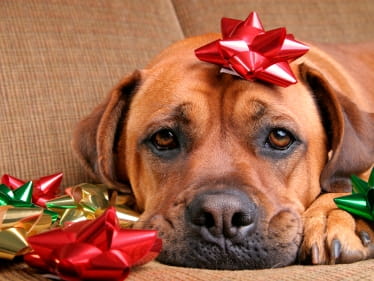
- Pets can choke on tinsel, ribbons, and Christmas tree needles. They can be cut by broken ornaments. Keep trees and their decorations high up or blocked off.
- Poinsettia is not a deadly plant, despite frequent warnings in the media. However, the sap from poinsettia plants can be very irritating. Pets who chew on poinsettia can develop skin rashes and mouth irritation. If they swallow the plant, they could have stomach upset and discomfort.
- Holly leaves are prickly and can cause injury if a pet tries to eat them. Holly berries can be poisonous; they easily dry up and fall onto the floor where pets (and children) can find them.
- Alcoholic beverages and chocolate are among the foods which pets should not consume. Empty the glasses and store left-overs safely so pets won’t consume the drinks or develop food poisoning.
- Many human medicines are poisonous to pets. For example, small amounts of over-the-counter pain relievers can be fatal to cats and dogs. Even if your own medicines are stored safely, be aware that visitors may have medicines in their purses or suitcases. Provide a place for these things to be stored safely, out of sight and reach of pets (and children).
If your pet swallows a battery, take the animal to the vet right away! It is NOT OK to wait. If your pet seems ill after getting into any kind of food or decoration, call your vet right away. If you have questions about something your pet may have swallowed, call Poison Control at 1-800-222-1222. Local specialists will answer your call, 24 hours a day.
Rose Ann Gould Soloway, RN, BSN, MSEd, DABAT emerita
Clinical Toxicologist
Poisoned?
CALL 1-800-222-1222
Prevention Tips
Pets need to be watched as carefully as children when it comes to holiday decorations, foods, and visitors.
This Really Happened
A dog swallowed an unknown quantity of pine tree needles and was coughing, gagging and wheezing. Poison Control advised her owner to take her to the veterinarian immediately due to possible airway obstruction. The veterinarian x-rayed the dog and did not find any obstruction, though the symptoms persisted for another 2 hours. Poison Control followed up with the dog's owner the following day. By then, the dog was eating and drinking normally and appeared fine.
For More Information
Pet poisons (ASPCA Animal Poison Control Center)Poisoned?
CALL 1-800-222-1222
Prevention Tips
Pets need to be watched as carefully as children when it comes to holiday decorations, foods, and visitors.
This Really Happened
A dog swallowed an unknown quantity of pine tree needles and was coughing, gagging and wheezing. Poison Control advised her owner to take her to the veterinarian immediately due to possible airway obstruction. The veterinarian x-rayed the dog and did not find any obstruction, though the symptoms persisted for another 2 hours. Poison Control followed up with the dog's owner the following day. By then, the dog was eating and drinking normally and appeared fine.